
Note: This DIY article is provided as a general guide only and is not intended to take the place of product-specific installation procedures; always follow applicable manufacturers’ instructions. Depending on your home’s age and condition, location within the home, and other potential factors, repairs and/or upgrades or other services may be necessary prior to the beginning and/or completion of your project that may involve the services of a home improvement professional. This article does not include advice pertaining to local building codes and/or any related inspections.
Silicone sealant does not last forever, so it’s worth asking, “Does sealant expire?” before you start a repair or home improvement project. An old tube may look usable at first, but expired material can cure poorly, apply unevenly, or fail much sooner than expected once the job is done. Understanding what affects shelf life and how to spot expired silicone sealant can help DIYers avoid wasted time and product.
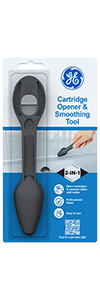
Once a sealant tube has been opened, poor sealing around the nozzle can let air in and cause the product to harden or cure unevenly. Keeping tubes sealed tightly and stored in a cool, dry place helps preserve performance. Tools like the GE Cartridge Opener and Smoother Tool can also help you handle the tube more cleanly during application, which will make storage and future use easier.
Does sealant expire? Here is the short answer
Yes, sealant does expire, including silicone sealant that has never been opened. Like many home improvement products, it has a shelf life that depends on the formula, the way it is stored, and how much exposure it gets to heat, cold, moisture, or air over time.
This means the answer to “Does caulk expire?” is also yes. In many cases, the tube will include a use-by date, date code, or other product information that helps you estimate whether it is still usable. Checking this information before you get started will save you time and help you avoid redoing the job later.
What affects silicone sealant shelf life?
Several factors determine how long silicone sealant stays usable in the tube. Heat, freezing temperatures, humidity, and direct sun can all shorten shelf life, even before the product is opened. Storage conditions matter because silicone is moisture-curing, which means exposure to air and moisture can start to change the material before you are ready to use it.
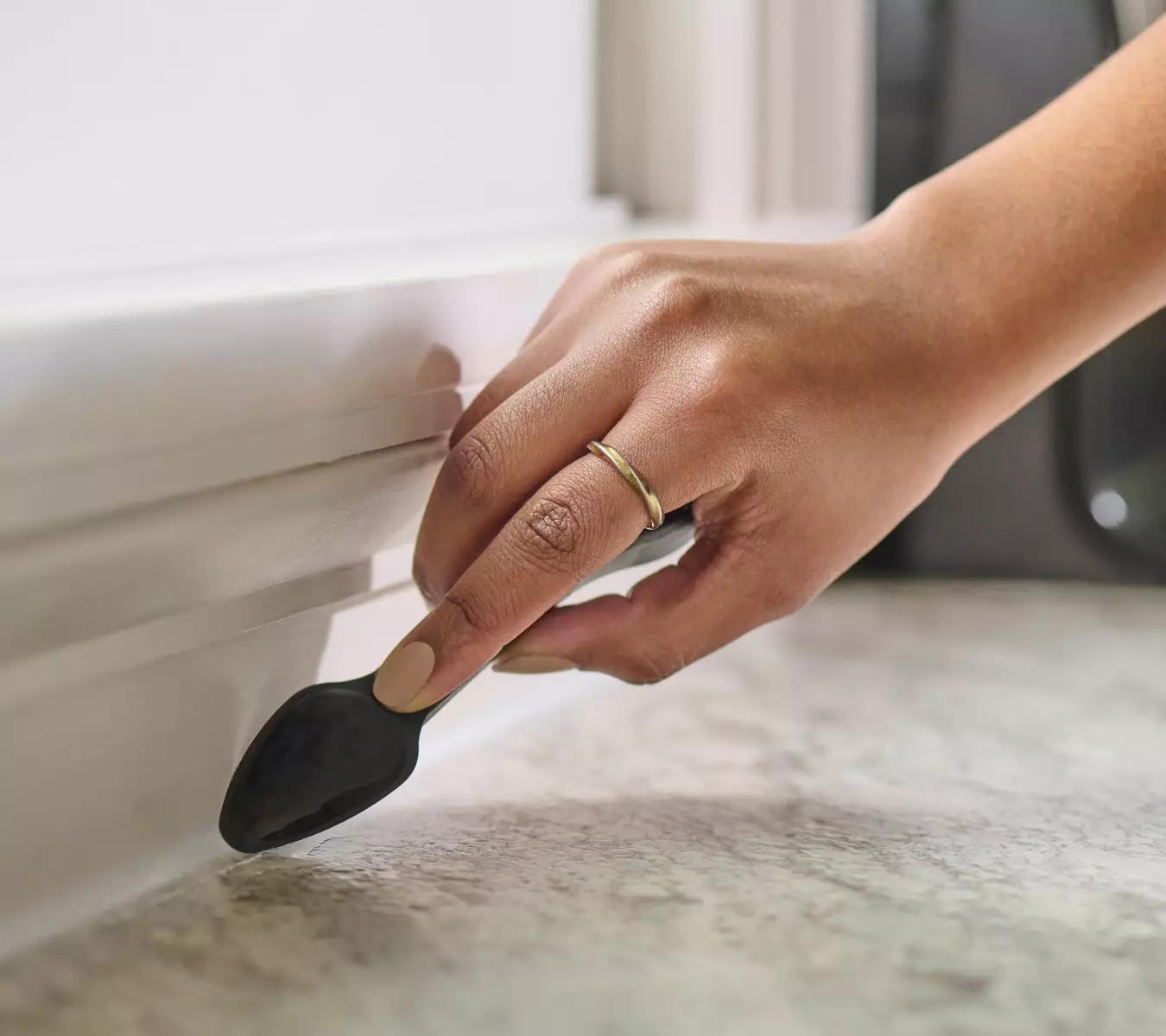
Once a tube has been opened, poor sealing around the nozzle can let air in and cause the product to harden or cure unevenly. Keeping tubes sealed tightly and stored in a cool, dry place helps preserve performance. Tools like the GE Cartridge Opener and Smoother Tool can also help you handle the tube more cleanly during application, which will make storage and future use easier.
5 signs your sealant may be expired or past its best use
Watch for these signs to identify expired silicone sealant:
-
The date on the tube has passed
The easiest warning sign is the one printed on the packaging. If the use-by date has passed, the sealant may no longer perform the way it should, even if the tube has never been opened. Over time, the material inside can begin to change in ways that affect consistency, adhesion, and cure performance.
Some tubes use a printed expiration date, while others use a batch or date code instead. If you are not sure how old the tube is, it is usually safer not to risk it on an actual repair. A fresh tube costs far less than the time and cleanup involved in fixing a failed seal.
-
The sealant has separated, turned runny, or looks uneven
Expired silicone sealant often shows visible changes before you even start the job. If the material looks watery, separated, lumpy, or uneven as it comes out of the tube, take it as a strong sign that it’s no longer usable. A good tube should dispense with a consistent texture that is smooth enough to apply and tool properly.
When the product starts to separate or behave unpredictably, it becomes much harder to control the bead and much less likely to cure the way it should. Rather than trying to work around expired silicone sealant, it is usually better to replace the tube and start with fresh material that can produce a cleaner, more dependable seal.
-
The product has hardened in the tube
If the sealant has hardened inside the nozzle or cartridge, it is usually no longer worth trying to save. This often happens after a tube has been opened and stored poorly, allowing air or moisture to start curing the product inside.
In some cases, the tip may be blocked while the rest of the tube still feels partly soft, but uneven curing like that can still lead to poor application and unreliable results. If you do end up with a failed bead from old product, the GE Sealant Remover Tool can help remove it cleanly before you reseal the joint with a fresh tube.
-
It doesn’t skin or cure as it should
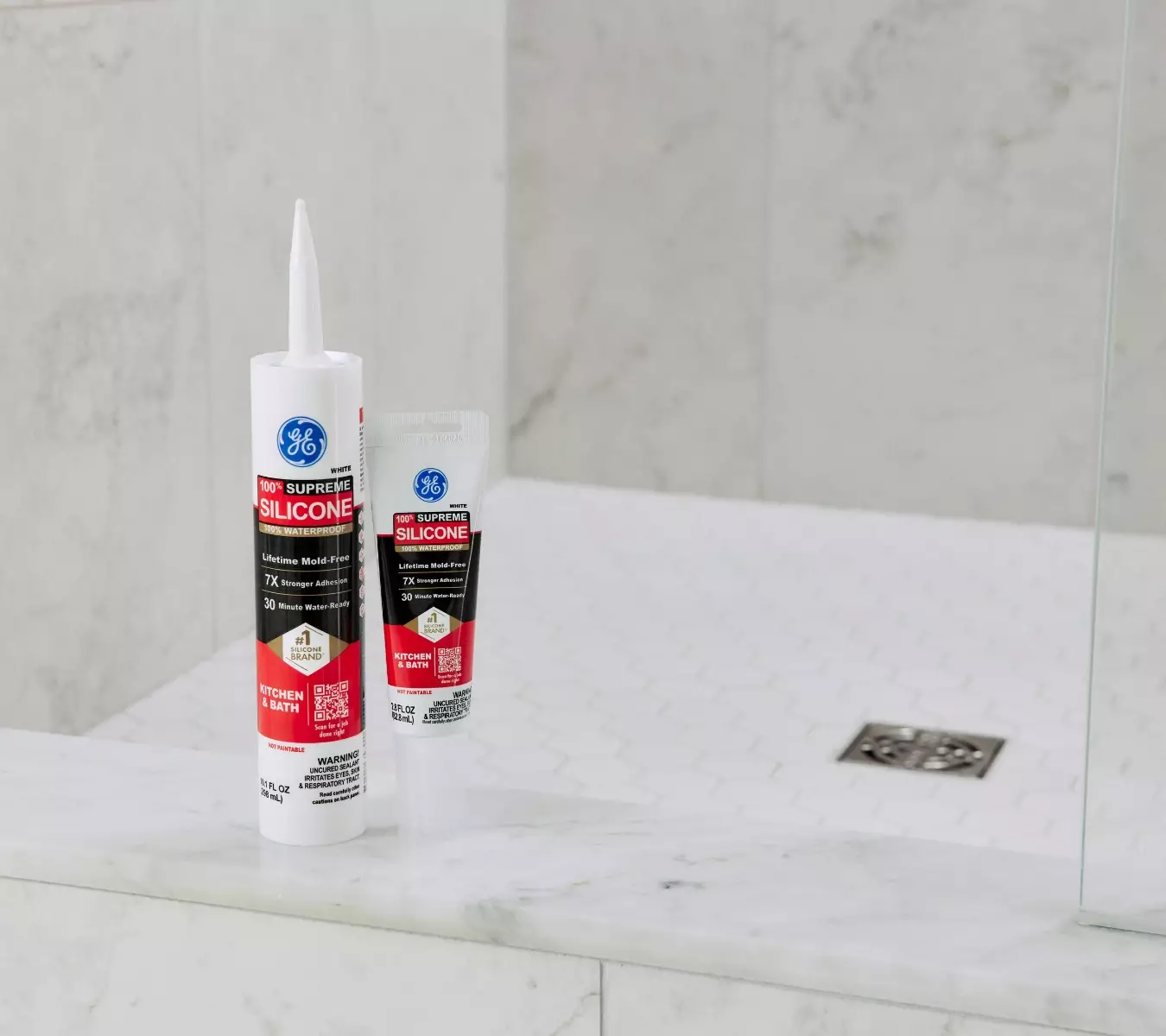
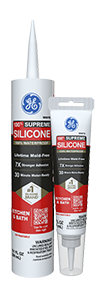
GE Supreme Silicone Kitchen & Bath. Old sealant does not always fail right away at the nozzle. In some cases, it applies normally but then takes too long to skin over, stays soft longer than expected, or never cures into a reliable seal. This creates a problem in areas where timing matters, especially around sinks, tubs, showers, and other wet spaces. If the product is not behaving the way the label says it should, age may be part of the issue. Using a fresh product such as GE Supreme Silicone Kitchen & Bath helps reduce that risk in wet-area applications.
-
The finished seal fails too soon
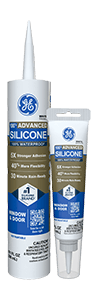
Sometimes the clearest sign of expired silicone sealant appears after the job is done. If the bead starts pulling away, cracking, shrinking, or letting water through much sooner than expected, the product may have been too old to perform properly. When that happens, it is usually better to remove the failed bead and reseal the joint with a fresh product such as GE Advanced Silicone Window & Door.
Even if the sealant looked normal during application, age can affect how well it bonds and cures over time. This is one reason DIYers shouldn’t rely on appearance alone when deciding whether an older tube is still usable.